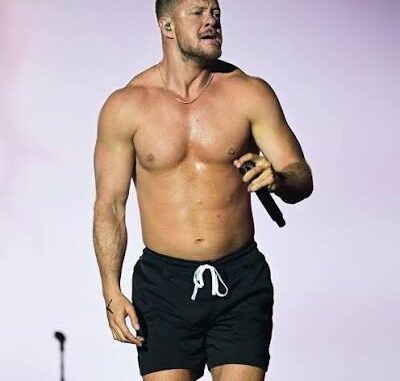
“According to circulating speculation, Dan Reynolds is said to have spoken about being gay, with informal sources suggesting he feels more drawn to men than to women.”
These claims have been spreading across a variety of online spaces, from social-media comment sections to entertainment-gossip pages, even though no verified statements or official confirmations have been released by the Imagine Dragons frontman himself.
Much of what is being repeated appears to come from loosely connected accounts, second-hand interpretations, and fan-driven discussions rather than any direct or reliable disclosure.
Despite this absence of concrete evidence, the rumors continue to gain traction.
As often happens with high-profile musicians, small details—such as interview moments, lyrics, or even body language during performances—are sometimes taken out of context and reinterpreted through the lens of speculation.
Some fans believe these supposed clues form a pattern, while others insist they are reading far too deeply into ambiguous or unrelated information.
The result is an ever-growing swirl of commentary, each version shifting slightly as different people add their own interpretations.
Informal sources fueling these conversations often claim that Reynolds may have privately addressed questions about his sexuality, though none of these reports provide recordings, statements, or firsthand corroboration.
Instead, they rely heavily on what someone allegedly heard, what someone else supposedly witnessed, or what a friend of a friend claims to know.
As these stories pass from one person to another, they tend to evolve, becoming more detailed or more dramatic, contributing to the confusion about what—if anything—was actually said.
At the same time, the speculation reflects a broader trend within celebrity culture: a fascination with the personal identities of public figures.
Fans frequently feel connected to artists, and this sense of connection can lead to increased curiosity about their private lives.
When questions arise, even without evidence, they can easily become the subject of ongoing discussion.
In Reynolds’ case, his long-standing public support for LGBTQ+ communities—particularly through the LoveLoud Foundation—has sometimes been misinterpreted by outsiders as a hint about his own identity.
Supporters who know his activism well caution against assuming that advocacy equates to self-identification.
On social media, reactions to the ongoing speculation vary widely.
Some individuals argue that conversations about a celebrity’s sexuality can be harmless curiosity, while others emphasize that such discussions may cross personal boundaries.
A number of fans have urged people to avoid presenting assumptions as facts, noting that personal identity is something only the individual can clarify.
They point out that spreading unverified claims can place unnecessary pressure on someone or distort public perception in ways that are difficult to correct later.
Still, the rumors persist. Every time a fan account revisits the topic or a gossip page reposts older speculation, the conversation resurfaces and grows again.
Some threads attempt to analyze past interviews or sift through old public appearances for clues.
Others promote theories without providing any evidence, simply repeating the circulating rumor as though it were confirmed.
These patterns illustrate how easily information—especially information about celebrities—can blur the line between suggestion and certainty.
Despite the volume of chatter, the central point remains unchanged: no reliable confirmation exists that Dan Reynolds has spoken publicly about being gay or about having a particular romantic preference.
All claims currently circulating remain unverified impressions, not established facts or official statements.
Until the artist himself chooses to address the subject directly—if he ever does—the truth of these rumors will remain uncertain.
For now, the discussions surrounding Reynolds’ orientation are shaped almost entirely by speculation, interpretation, and the natural tendency for celebrity narratives to grow as they travel online.
While the rumors may continue to circulate, they should be understood for what they are: unconfirmed claims with no verified basis, sustained largely by curiosity, repetition, and the rapid spread of information in the digital age.
Leave a Reply