
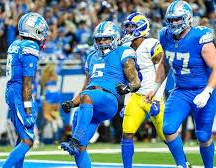
Draft Presents Opportunity for Lions
The Detroit Lions enter this year’s NFL Draft in a position they have not experienced often in recent memory: strength.
For decades, the franchise was synonymous with rebuilding projects, quarterback controversies, and high draft picks that were expected to serve as saviors rather than supplements.
But after a resurgent 2023 season that saw Detroit win the NFC North and reach the NFC Championship Game, the Lions find themselves in a new role.
They are no longer searching for an identity.
Instead, they are seeking the final few pieces that can transform them from an upstart contender into a perennial powerhouse.
One of the most pressing questions for general manager Brad Holmes and head coach Dan Campbell is how to continue protecting quarterback Jared Goff and sustaining the offensive balance that fueled their success.
Detroit boasts one of the league’s best offensive lines, anchored by Pro Bowl tackles Penei Sewell and Taylor Decker, and veteran center Frank Ragnow.
But the interior, particularly at guard, could benefit from added depth and long-term stability.
That makes the draft an ideal place to address the interior offensive line, both for immediate competition and for building the foundation of the future.
Why the Offensive Line Matters
The Lions’ offense ranked among the NFL’s most efficient last season, powered by a combination of a strong running game and timely passing.
Rookie running back Jahmyr Gibbs and veteran David Montgomery formed one of the league’s most dynamic backfield tandems, consistently churning out yardage behind the offensive line.
Goff, often maligned earlier in his career for his inconsistency under pressure, thrived when given time, delivering accurate throws to Amon-Ra St.
Brown and rookie tight end Sam LaPorta.
All of that production stemmed from the line’s ability to control the trenches.
But the NFL is an unforgiving league, and injuries or attrition can quickly erode even the strongest units.
The Lions’ core starters are reliable, yet they have battled through wear and tear in recent seasons.
LlRagnow, for instance, has dealt with nagging toe issues.
Depth on the inside becomes critical when a team is chasing not just playoff appearances but Super Bowl aspirations.
The Draft as a Solution
Free agency can provide experienced linemen, but it is rarely a cost-effective or long-term fix.
Elite interior blockers seldom reach the open market, and those who do often command salaries that are difficult to justify for depth roles.
The draft, by contrast, offers teams the chance to secure young, moldable talent at a fraction of the price.
This year’s class features several intriguing interior prospects who could fit the Lions’ physical identity.
Guards such as Zak Zinter (Michigan), Christian Haynes (UConn), and Cooper Beebe (Kansas State) all bring a mix of toughness, versatility, and proven experience.
Centers like Jackson Powers-Johnson (Oregon) and Sedrick Van Pran (Georgia) also project as high-upside players who could transition smoothly into guard roles if needed.
Detroit doesn’t necessarily need to invest a first-round pick in an interior lineman, given the strength of their roster and the positional value of other needs such as cornerback or edge rusher.
But targeting the middle rounds for a plug-and-develop lineman could pay dividends.
In a league where games are often decided by line play in December and January, having a deep, flexible offensive front is invaluable.
Building for the Long Term
Drafting an interior offensive lineman is about more than insurance for injuries.
It is also a way to prepare for the inevitable roster churn that comes with success.
The Lions are entering the phase where star players require extensions, and salary-cap management becomes a delicate balancing act.
Investing in young, affordable linemen allows Detroit to keep its cap sheet flexible while continuing to field one of the league’s best protection units.
Additionally, it reinforces the identity that Campbell has established: toughness, resilience, and winning in the trenches. Few teams play with the physical edge that Detroit displayed last season, and continuing to prioritize the offensive line ensures that style remains sustainable.
Beyond the Line
Of course, the Lions’ draft will not revolve exclusively around the offensive line.
The defense, though improved, still requires more pass-rushing juice and additional stability in the secondary.
Cornerback depth, in particular, remains a need after injuries hampered the group last season. Yet what makes this draft unique for Detroit is the luxury of choice.
For the first time in years, the franchise is drafting from a position of strength rather than desperation.
Whether Holmes and Campbell choose to address the trenches early or later in the draft, the opportunity to refine rather than rebuild is a testament to how far the Lions have come.
This draft is less about plugging holes and more about sharpening weapons.
It is about transforming a promising team into one that can truly contend for a Super Bowl.
Conclusion
The Detroit Lions’ story is no longer one of perennial rebuilding.
Instead, they stand as one of the NFL’s most compelling contenders, powered by a roster that reflects careful planning and bold culture change.
The upcoming draft presents yet another opportunity: not to start over, but to strengthen what already works.
Leave a Reply